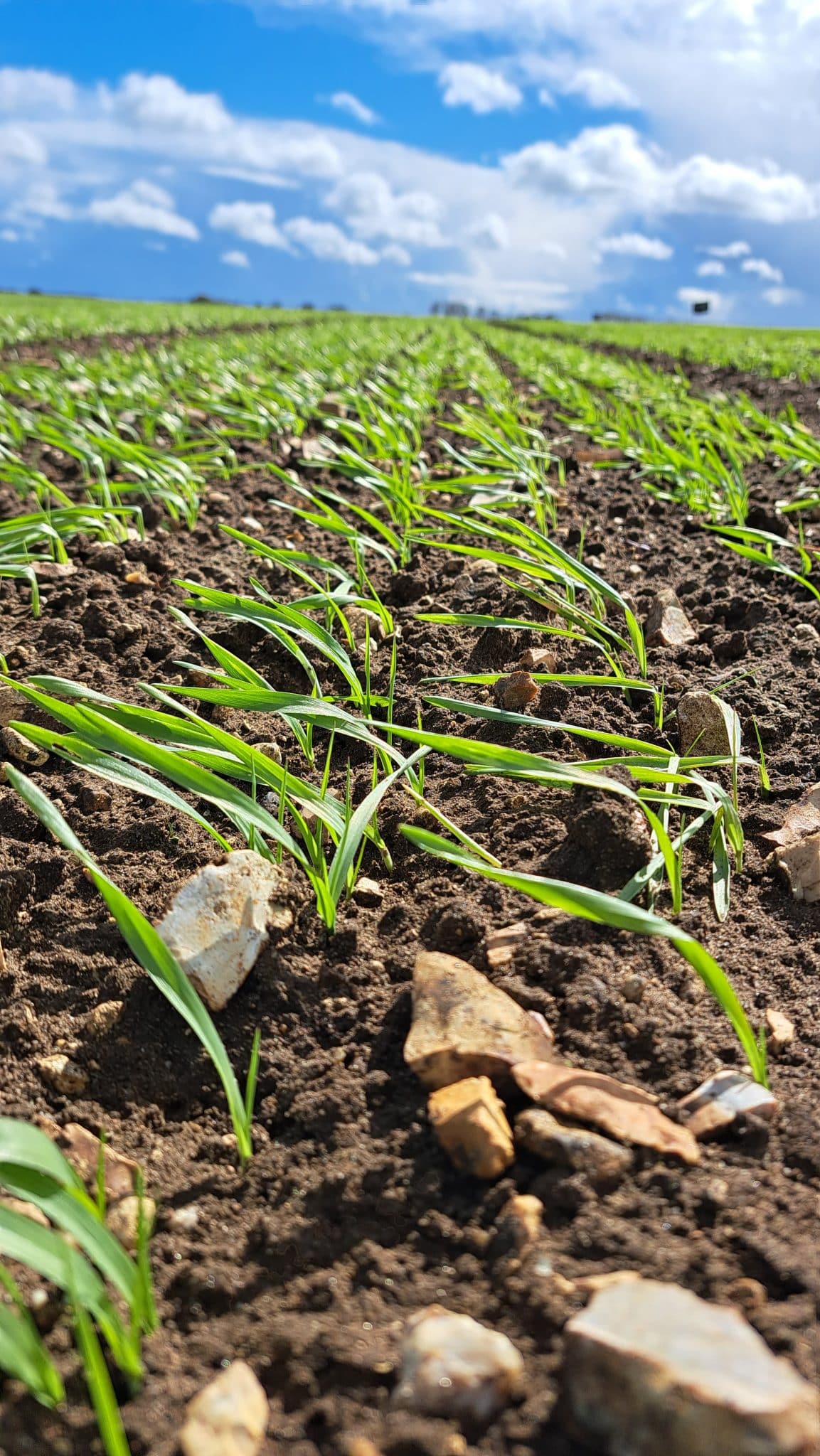
The conditions in a regenerative situation can be completely alien to those in Recommended List (RL) trials, so much so that it’s tough for farmers to judge a variety’s regenerative performance on RL statistics alone.

A high-performing RL variety is like a thoroughbred racehorse; it’s fed high-energy rations and kept in pristine stables to deliver exceptional results. But regen growers are looking for a horse to race in a point-to-point: rugged, dependable, and one which stays the course regardless of what’s thrown at it.
To set these two apart, what should regenerative growers look out for in a new variety?
1) Disease resistance
It’s number one on the list for most regenerative situations. Without good varietal disease resistance to the key threats of septoria, yellow and brown rust, it’s incredibly challenging to reduce fungicide inputs without seriously compromising yield.
Fortunately, this is one area where the RL data can be accurately extrapolated to a regenerative situation. Septoria is usually the most reliable, and I recommend 6.5 as a minimum if you’re looking to significantly reduce fungicide applications without compromising yield.
Yellow rust is trickier because of the shifting populations, notably this year with the breakdown of YR15. As breeders, we work hard to stack multiple resistance genes together to generate a robust yellow rust score without placing any particular gene under too much pressure. I’d recommend looking for a minimum yellow rust score of seven, but also one which you have confidence in.
One point to note is that both RGT Goldfinch and RGT Hexton are unaffected by the breakdown of YR15 because they rely on combinations of other genes for their resistance.
2) Insect resistance
No farmer wants to spray insecticides on their crops, and especially not in a regen situation. Genetic resistance protects against key pest threats, without insecticides.
The two main pests that plant breeding protects against are orange wheat blossom midge (OWBM) and barley yellow dwarf virus (BYDV). Both can be sporadic in their risk to crops, but few farmers forget the costs of a badly hit crop.
Many regenerative farmers rely on an increasing beneficial population to control pests like aphids. However, these can take some time to build up, and are not foolproof in their protection. Growing a variety with genetic resistance is the only way to reliably go insecticide-free and protect from OWBM or BYDV yield loss.
3) Market premiums
Many regenerative cereal growers seek market premiums for their sustainable growing practices. Fortunately, new outlets like Wildfarmed and regen contracts from established millers have provided a ready market for this.
This is why Group 1 and Group 2 milling wheats are a popular choice for regen growers. However, combining the necessary agronomic traits with the grain characteristics millers need is a tricky proposition for breeders. There’s always a compromise, be it rust susceptibility or yield.
4) Growth habit and rooting
No-till establishment presents varieties with a different set of challenges compared to those established using tillage. Row spaces are often wider, and compaction can be a more significant problem. That’s why regenerative farmers look for high-biomass and aggressively rooting varieties.
It’s a challenge (and expensive) to provide data for either of these parameters, which is why it’s so important to observe how varieties grow in the field at demo days or events like Cereals.
One point to investigate on RL data when looking for good rooting and resilience is the second wheat yield. Not necessarily the overall percentage, but whether it’s higher than the first wheat yield. This indicates a variety that can cope with less-than-ideal conditions and still thrive.
Varieties to try this autumn
If you are looking to grow a newly recommended variety on your regen farm this season, you should consider RGT Goldfinch.

Yes, with an 89% yield in RL trial conditions, it will struggle to compete with other varieties for yield in a high-input scenario involving numerous insecticides, fungicides, nitrogen, and cultivations; however, that’s not what regenerative agriculture is about.
RGT Goldfinch is the first UK variety to combine BYDV resistance with OWBM resistance, taking it as close to an ‘insecticide-free’ as possible. Furthermore, it has 6.9 for Septoria and 9s for yellow and brown rust, supporting a reduced input programme. Add in premiums for it being a Group 2, and RGT Goldfinch provides everything you need for next year’s regeneratively grown crop.
It’s rugged, dependable, and one which stays the course regardless of what’s thrown at it.